Writing has a quiet way of helping us slow down. When thoughts begin to loop, emotions feel heavy, or anxiety lingers without a clear reason, putting words on paper can create space between what you are feeling and how deeply it controls you.
That space matters. It allows you to breathe, observe, and respond with intention rather than urgency.
Anxiety journaling is not about fixing yourself or forcing positivity. It is about gently releasing what is weighing on your mind so it no longer lives solely inside your body. Through writing, you begin to see your thoughts more clearly, recognize emotional patterns, and meet yourself with care instead of criticism.
For many women, journaling becomes a soft ritual rather than a task. Over time, it supports emotional balance, nervous system regulation, and self awareness by offering a place to pause and process without judgment.
In this post, we explore what anxiety journaling is, how it supports mental and emotional wellbeing, and how to begin in a way that feels calm, supportive, and sustainable.
This blog also includes a few gentle reflection tools shared throughout to support grounding, clarity, and emotional regulation.
What Is Anxiety Journaling
Anxiety journaling is the practice of writing down thoughts, emotions, worries, and physical sensations connected to anxiety. Rather than holding everything internally, journaling allows you to place those experiences somewhere safe and external.
The goal is not to analyze every feeling or solve every problem. It is simply to acknowledge what is present so it no longer needs to compete for your attention all at once.
When anxious thoughts stay in the mind, they often feel louder and more overwhelming. When they are written down, they become easier to observe, reflect on, and soften around.
Anxiety journaling can look different for everyone. Some people write freely. Others respond to prompts. Some journal daily, while others write only when emotions feel heavy. There is no single correct approach, only what feels supportive in the moment.
Gentle Reflection Tools Included in This Post
As you read, you will find a few optional tools designed to support your journaling practice.
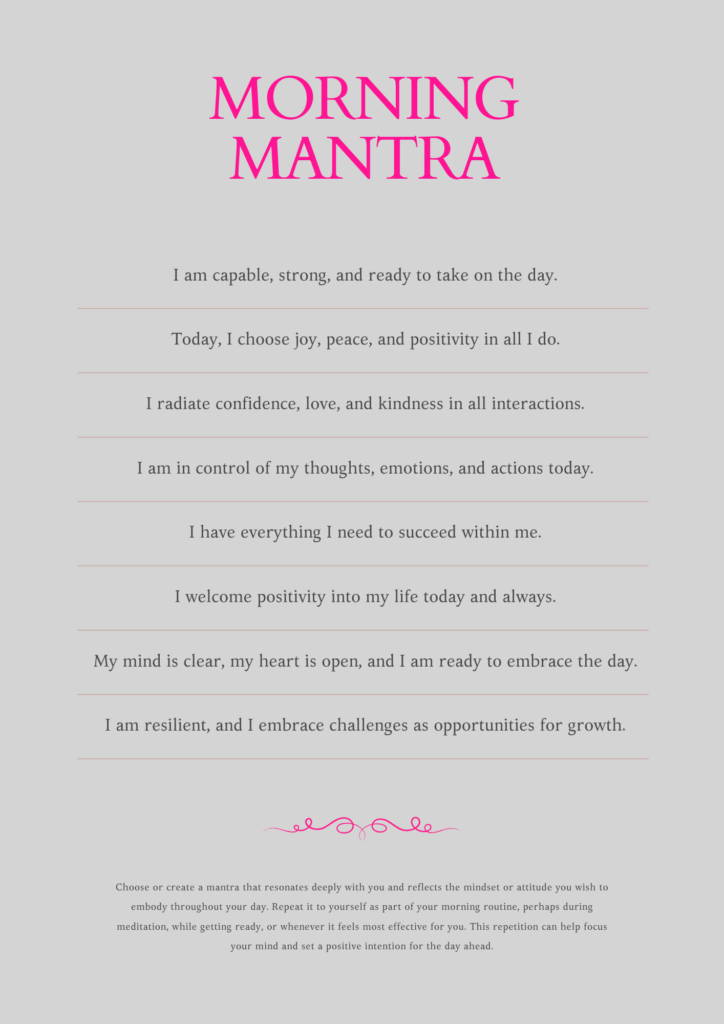
One is a Morning Mantra practice, created to help you begin the day feeling grounded, calm, and emotionally supported. These affirmations are meant to be read slowly, repeated intentionally, or written into your journal to help regulate your nervous system and set a steady tone before external stressors take over.
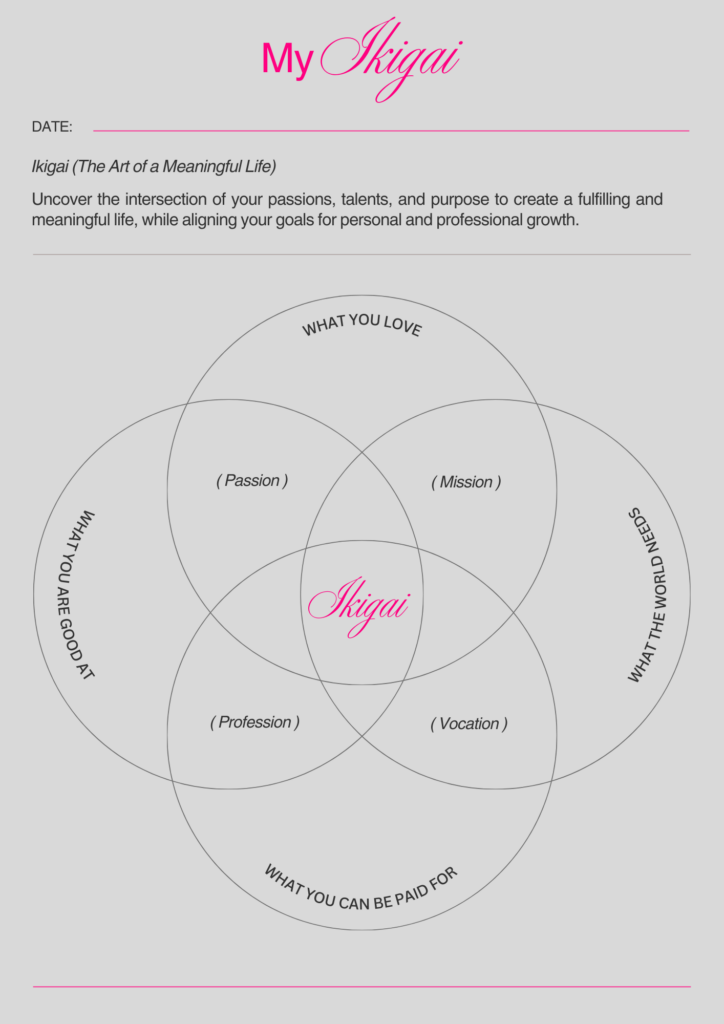
You will also find an Ikigai reflection guide, offering a deeper journaling experience focused on purpose, alignment, and inner meaning. This guided exercise helps you explore what brings fulfillment, what you are naturally drawn to, and how your values connect to personal growth. During periods of anxiety, this reflection gently shifts focus from fear and overwhelm toward direction and clarity.
These tools are optional. They are here to support you, not to add pressure.
Is Journaling Helpful for Anxiety
For many people, journaling is a helpful tool for managing anxiety and stress. Writing creates a pause. It slows the nervous system and offers an outlet for thoughts that might otherwise circulate endlessly.
When anxiety is written down, it becomes more tangible and less abstract. This can make worries feel more manageable and less consuming.
Journaling also allows you to notice patterns over time. You may begin to recognize emotional triggers, recurring thoughts, or situations that increase or ease anxiety. This awareness alone can feel grounding.
While journaling is not a replacement for professional care, it can be a supportive practice that complements other forms of emotional support.
Why Journaling Supports Emotional Balance
Anxiety often thrives in mental clutter. Journaling helps create order without forcing structure.
Some of the ways journaling supports emotional wellbeing include:
-
providing emotional release through expression
-
slowing racing thoughts
-
increasing self awareness
-
reducing mental overstimulation
-
encouraging gentler self talk
-
helping you feel less alone with your thoughts
Writing does not need to be profound or polished to be effective. Even a few sentences can offer relief.
Gentle Benefits of Anxiety Journaling
Journaling is often recommended because it is accessible, low pressure, and adaptable. Over time, it can support emotional regulation in subtle but meaningful ways.
Many people notice:
-
reduced stress and mental tension
-
improved clarity and focus
-
greater emotional awareness
-
a sense of grounding and calm
-
a healthier relationship with thoughts
-
increased self compassion
The page holds whatever you bring to it, without judgment.
Creating a Calm Journaling Practice
Anxiety journaling does not need to be rigid or time consuming. In fact, simplicity often makes it more sustainable.
Start small and keep it focused. Five to ten minutes is often enough. You can set a timer if that feels helpful.
Choose a time that feels natural. Some people journal in the morning to clear their mind. Others prefer the evening to release the day.
Let go of rules. Grammar, structure, and format do not matter. You can write in sentences, bullet points, or fragments. The page is yours.
Choose tools that feel comforting, not performative. A notebook, loose paper, or a digital journal all work equally well.
Anxiety Journal Prompts for Reflection
If staring at a blank page feels intimidating, prompts can help guide your thoughts.
You might try:
-
Right now, I am feeling
-
The thoughts looping in my mind today are
-
Something that is weighing on me is
-
What I need more of right now is
-
One thing that helped me feel calmer today was
-
A boundary I may need to honor is
-
A compassionate reminder I need today is
You do not need to answer every prompt. Choose one and write freely.
A Gentle Reminder
There is no right or wrong way to journal. Some days writing will feel easy. Other days it may feel heavy. Both are valid.
Anxiety journaling is not about perfection. It is about presence.
Final Reflection
Writing offers a quiet refuge when the mind feels loud. Through journaling, you can create a gentler relationship with your thoughts rather than feeling controlled by them.
You do not need to push yourself to feel better. You only need to begin listening.
Over time, that attention becomes care. And care creates calm.
If journaling feels supportive and you would like a gentle structure to return to when anxiety shows up, I created a digital journal called Shut Up I’m Manifesting. It is designed as a calm space to release mental noise, reflect honestly, and set intentions without pressure or forced positivity.
You can explore the digital journal on Etsy if it feels aligned for you.
Disclaimer
This content is for informational and educational purposes only and is not intended as medical or mental health advice. For ongoing or severe symptoms, consider seeking support from a qualified healthcare professional.
Morning Mantra: A Grounding Practice for Calm and Clarity
My Ikigai: A Guided Reflection for Purpose and Alignment